Msikaba River Bridge, engineering progress with purpose.
Part of South Africa’s N2 Wild Coast Toll Road project, the Msikaba River Bridge is set to become one of the highest bridges in the country. SMEC, as lead partner in the HVA Joint Venture, is overseeing the design and supervising construction.
-
Location
Eastern Cape, South Africa
-
Period
2017 - 2025
-
Member companies
SJ, SMEC
-
Impact
Boosting economic expansion
-
580m
Bridge length
-
192m
Bridge height
-
787km²
Earthworks cut
Global thinking, local impact.

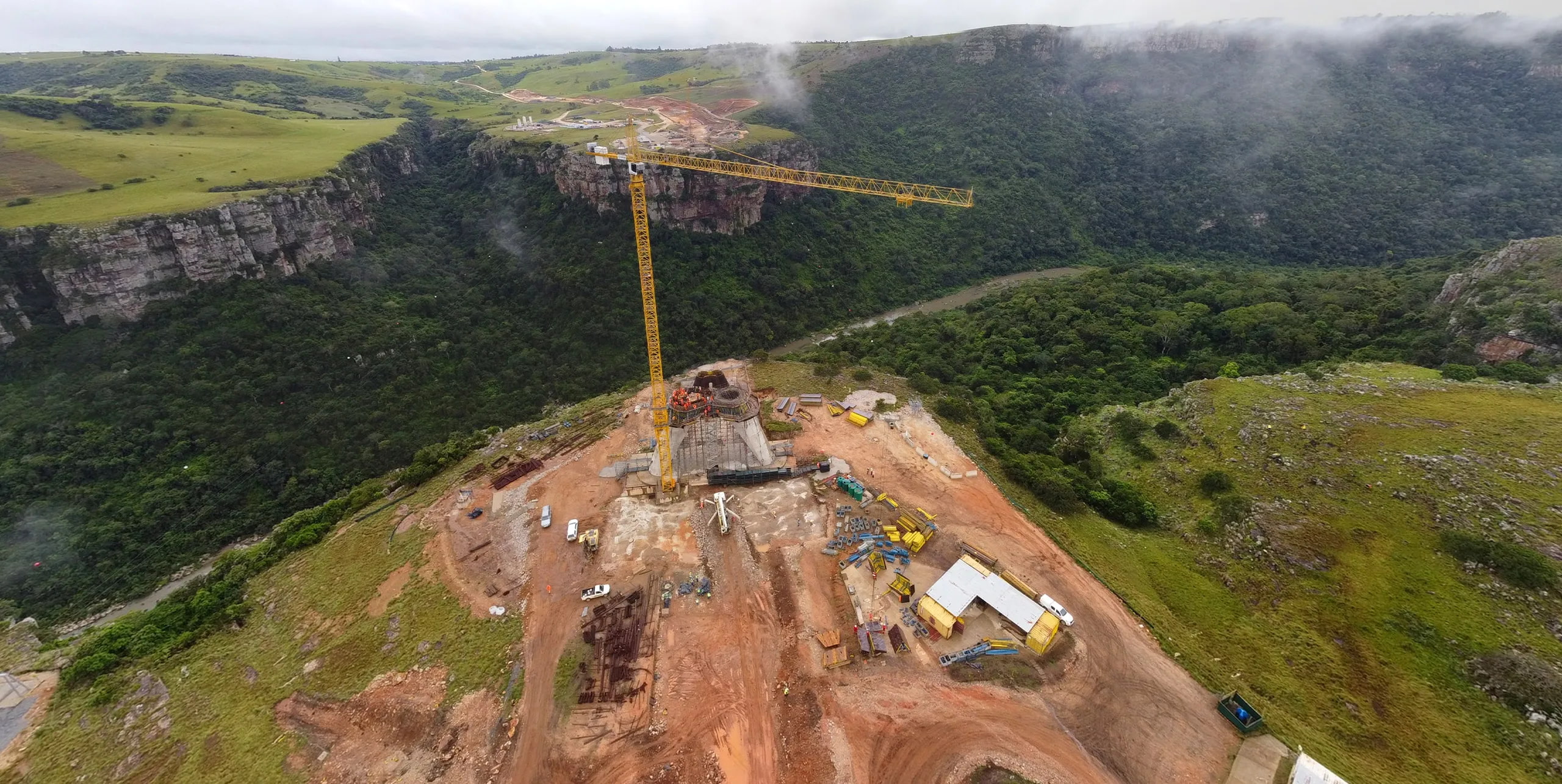
Rising 192 metres above the Msikaba River Gorge and spanning 580 metres, the bridge is a structural feat connecting a critical corridor. Located near Lusikisiki in the Eastern Cape, it will form a key link between Durban and East London, significantly improving travel times and freight efficiency. Designed with two inverted Y-shaped pylons and a dual two-lane composite deck, the cable-stayed structure reflects engineering and architectural ambition. The deck spans 530 metres and is built segmentally from each bank, allowing for continuous progress and optimal load balance.
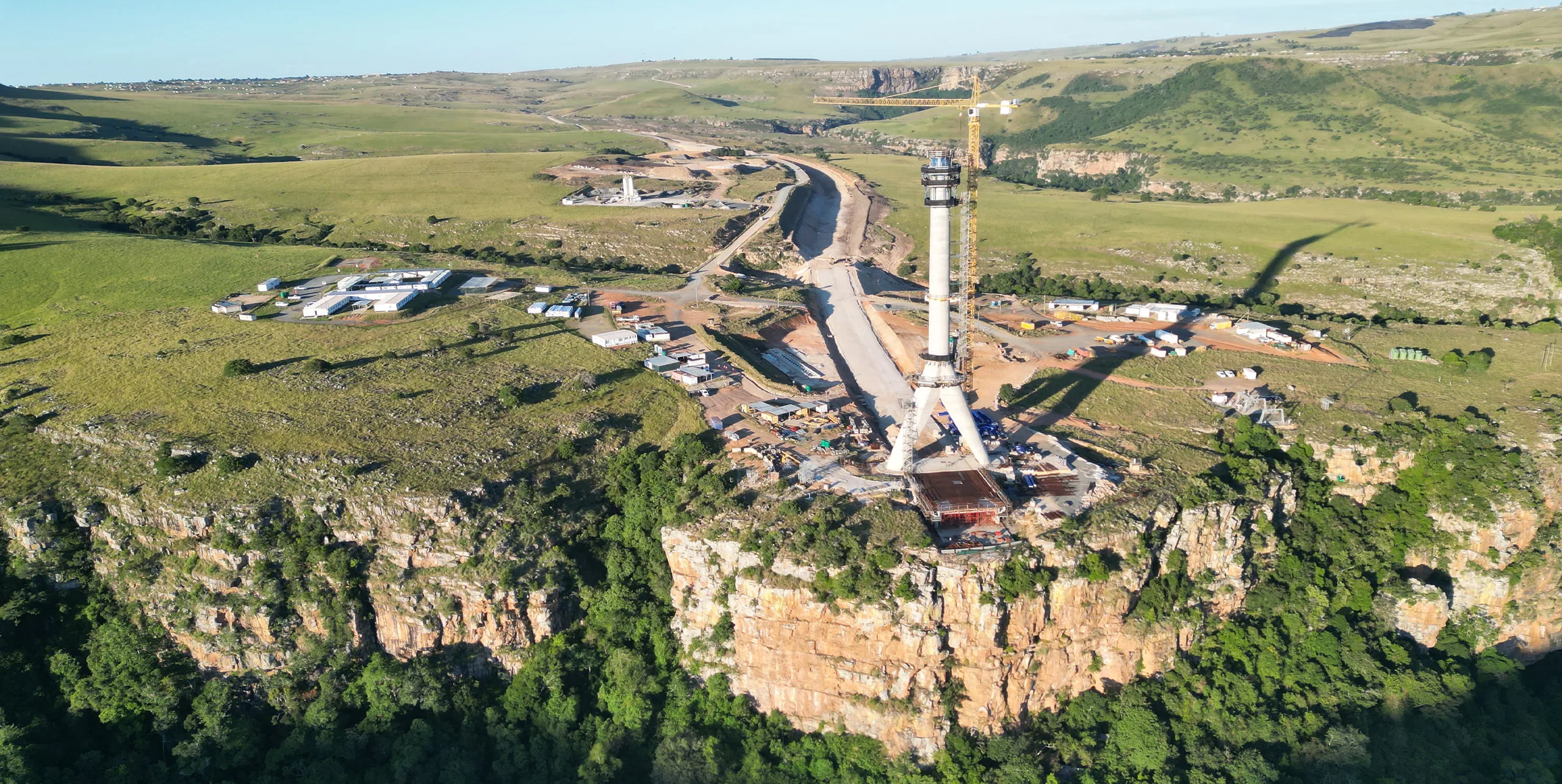
Constructing in a remote, topographically complex environment presented major logistical and sequencing challenges. With a three-hour drive between the gorge’s banks, a mono-rope cable car system was installed to reduce crew travel time to eight minutes. Temporary accommodation was secured through a partnership with Magwa Tea Estate, housing SMEC’s site staff. On site, large-volume concrete pours were supported by thermal modelling and in-situ monitoring to control stress gradients and prevent cracking. Full wind tunnel testing ensured aerodynamic stability during both construction and in-service conditions.
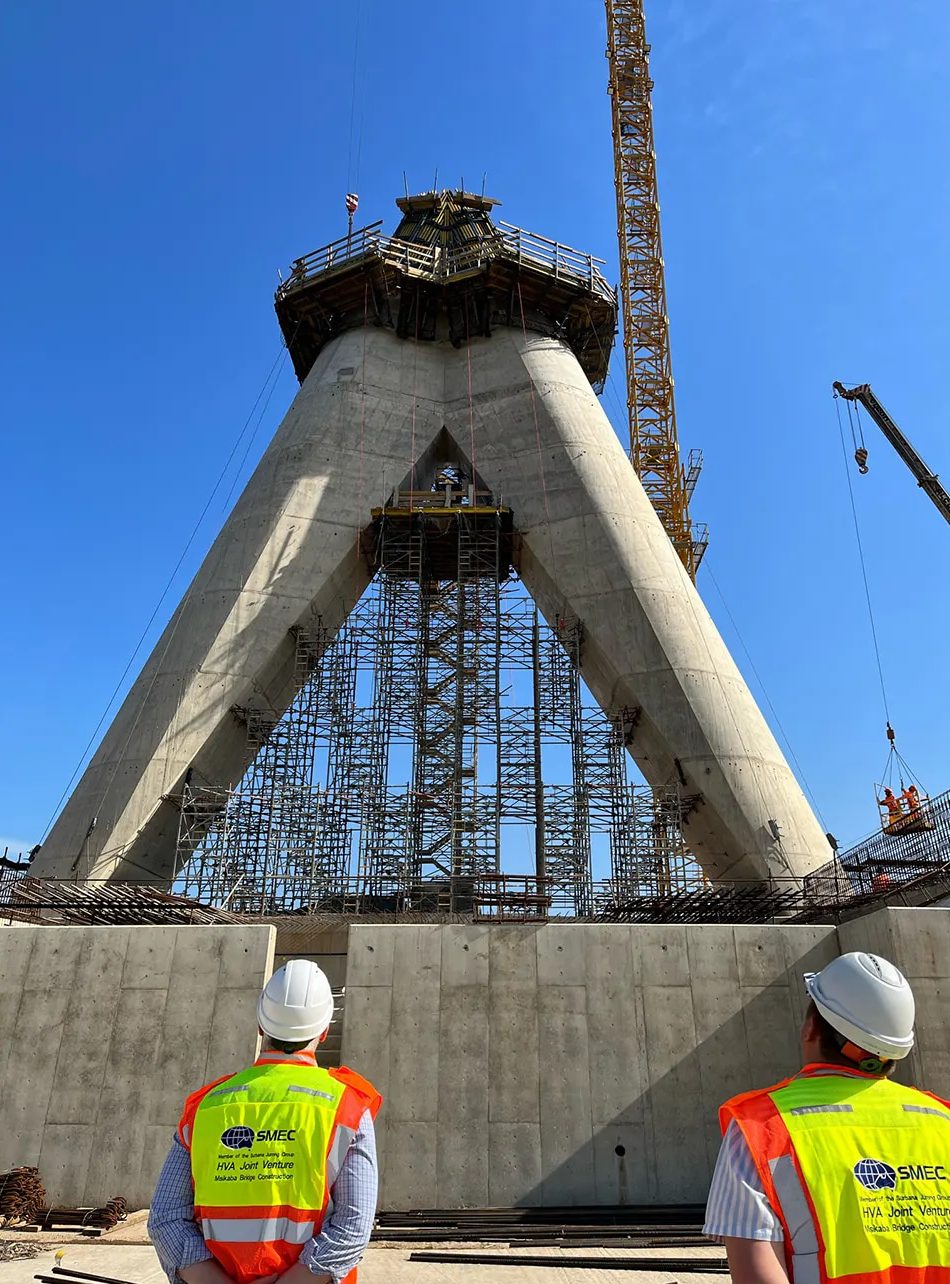
The bridge’s structural design includes 127-metre-tall pylons anchored by 17 pairs of stay cables and backstays, supported by anchor blocks weighing 15,500 tonnes each. A 300-stage analytical model was developed to guide deck erection, fine-tune cable forces, and ensure accurate alignment. A comprehensive structural health monitoring system – including sensors, GPS, and weather instrumentation – tracks real-time behaviour and movement across key components. Grouting trials and pre-stressing verification added further rigour to the construction process.
-
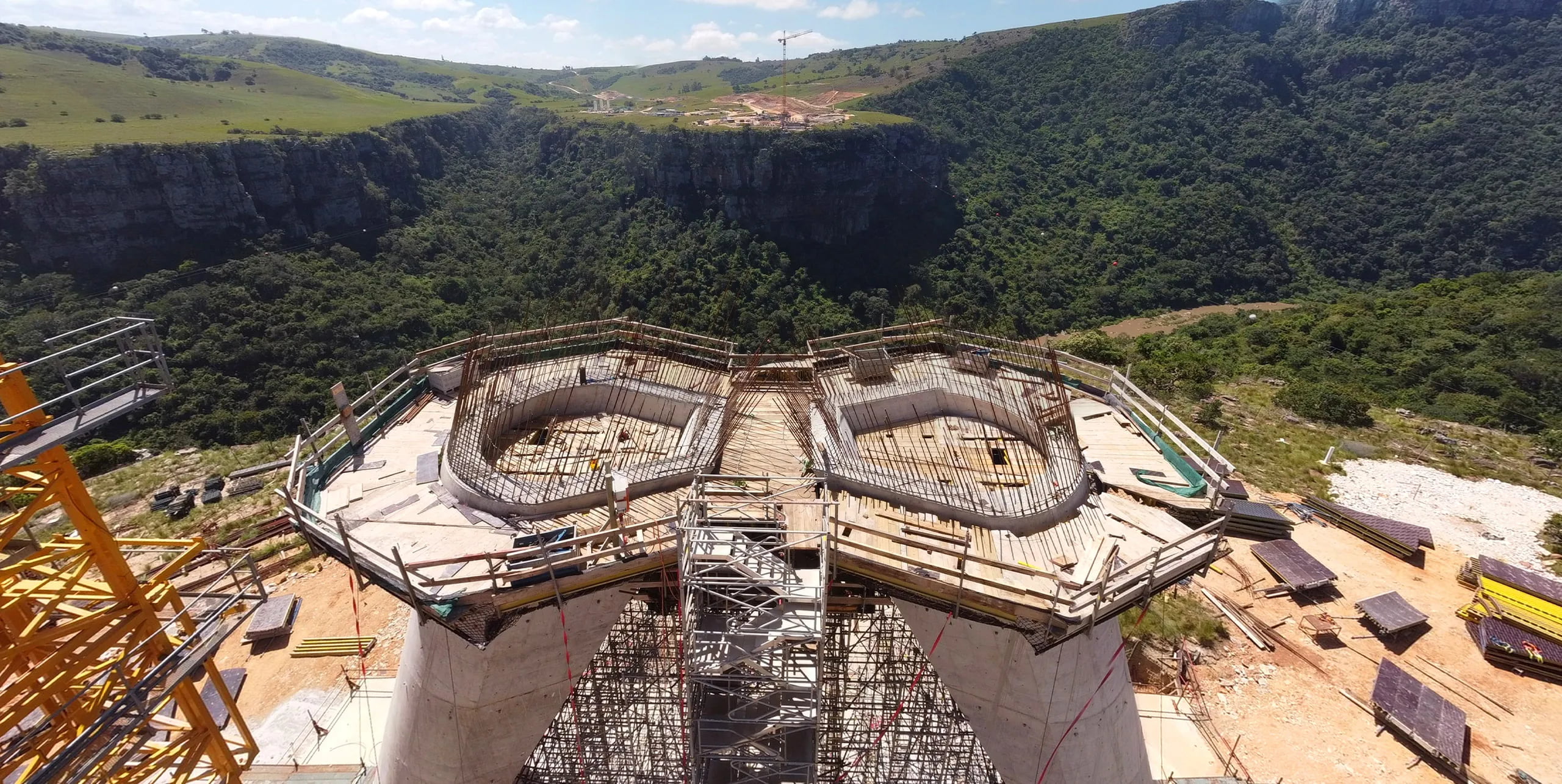
image caption
-
-

The outcome
Upon completion in 2025, the Msikaba River Bridge will stand as one of Africa’s most iconic cable-stayed structures. Beyond its scale and complexity, the project delivers measurable impact: reducing travel times by up to three hours, stimulating trade routes and creating over 20,000 job opportunities. As a strategic infrastructure project, it exemplifies how thoughtful engineering, community engagement and resilient delivery can converge to transform national mobility and regional growth.
Up next